
CPVC Chemical Piping
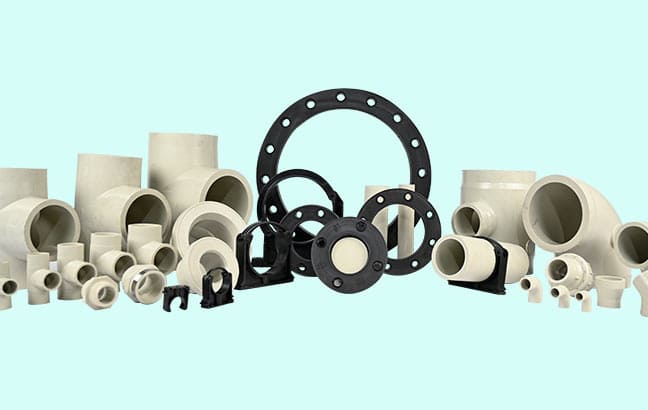
CPVC Chemical Piping — Reliable Solutions for Hot & Corrosive Fluid Transport
DeltaFlow Solutions Pvt. Ltd. supplies CPVC (Chlorinated Polyvinyl Chloride) Chemical Piping systems, a cost-effective thermoplastic solution for applications combining chemical resistance with elevated operating temperatures. CPVC extends the temperature capability of standard PVC significantly, making it well suited to hot corrosive fluid transport in industrial and process plants across India.

Why CPVC is Suited to Hot Chemical Applications
CPVC is produced by chlorinating PVC resin, which increases its heat deflection temperature and chemical resistance compared to standard PVC. This makes CPVC piping particularly effective for applications involving hot water, hot acids, and other corrosive fluids at elevated temperatures where standard PVC piping would soften or fail. CPVC pipe and fittings are joined using solvent cement jointing, a chemical welding process distinct from the thermal fusion welding used for PP, PPH, and PVDF piping systems.
Key Features
- Higher temperature resistance than standard PVC piping
- Good chemical resistance to acids, alkalis, and salt solutions
- Reliable solvent cement jointing for consistent, leak-proof joints
- Lightweight and easy to fabricate and install
- Cost-effective compared to metal and higher-grade thermoplastic piping
- Available in multiple diameters and pressure ratings
Industrial Applications
- Hot corrosive chemical transfer lines
- Industrial process piping involving elevated fluid temperatures
- Chemical dosing and process piping in manufacturing plants
- Acid and alkali transport at moderate to high temperatures
- General industrial piping where PVC's temperature limits are insufficient
Why Choose DeltaFlow for CPVC Chemical Piping
DeltaFlow supplies CPVC chemical piping along with technical guidance on chemical compatibility, temperature ratings, and correct solvent cement jointing practices to ensure long-term, leak-free performance. Our team helps clients select the right piping material — whether CPVC, PP, PPH, or PVDF — based on the specific chemical and temperature profile of their application.
FAQs About Cpvc chemical piping
Q1. What is CPVC chemical piping used for?
CPVC chemical piping is used to transport hot corrosive fluids and process chemicals in applications where standard PVC's temperature limits are insufficient.
Q2. How is CPVC piping joined?
CPVC pipe and fittings are joined using solvent cement jointing, a chemical bonding process rather than the thermal fusion welding used for PP, PPH, or PVDF piping.
Q3. What temperature range can CPVC piping handle?
CPVC piping offers a notably higher heat deflection temperature than standard PVC, making it suitable for hot water and elevated-temperature chemical applications.
Q4. Is CPVC more chemical resistant than standard PVC?
Yes, the chlorination process used to produce CPVC improves its chemical resistance compared to standard PVC, particularly at higher temperatures.
Q5. Does DeltaFlow help select between CPVC, PP, and PVDF piping?
Yes, DeltaFlow's technical team evaluates the specific chemical, concentration, and temperature requirements of each application to recommend the most suitable piping material.